Health and Safety Policy — Commercial Waste Crystal Palace Services
 This Health and Safety policy sets out the commitment of our commercial waste services operation to maintain a safe and healthy environment for employees, visitors and customers engaged with commercial waste collection and rubbish removal in the service area. The policy applies to all operational activities including commercial refuse collection, on-site waste handling, vehicle operations and transfers to permitted facilities. It is written to be practical and proportionate, recognising the specific risks of a rubbish company while remaining general enough to be used as a legal policy statement.
Our aims are to: prevent injury and ill-health, reduce the likelihood of incidents, ensure compliance with relevant duty-of-care obligations and continuously improve safety performance across the rubbish collection and commercial waste handling lifecycle. The scope includes permanent staff, contractors, drivers, loaders and office personnel involved in commercial waste removal and recycling operations.
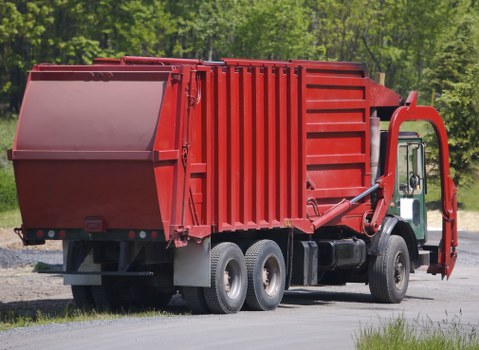 Responsibilities are clearly defined: senior management retains overall accountability for health and safety; operational supervisors manage day-to-day risk control; employees must follow safe systems of work and report hazards promptly. The appointment of designated safety leads ensures regular reviews and that safety information reaches everyone involved in refuse collection and commercial waste operations. All staff are required to cooperate with safety procedures and contribute to a positive safety culture.
Risk Assessment, Controls and Safe Systems
Formal risk assessments are carried out for routine tasks such as bin lifting, manual handling of bulky items, confined-space waste containers, sharps exposure, hazardous waste segregation and vehicle loading/unloading. Control measures are implemented using hierarchy of controls: elimination, substitution, engineering controls, administrative controls and personal protective equipment. PPE such as gloves, high-visibility garments, steel-toe boots and eye protection are provided and maintained.
 Practical safe systems include pre-shift vehicle checks, safe route planning to minimise reversing, safe lifting techniques training for operatives, and clear segregation procedures for hazardous waste streams. Regular toolbox talks, induction training and competency checks form part of our ongoing prevention strategy. We emphasise safe interaction with customers' sites and third-party contractors during commercial waste collection to reduce on-site hazards.
A documented checklist and reporting mechanism ensures near-misses and incidents are captured, investigated and used to update controls. Where specialist waste types are encountered, operations pause until appropriate measures are confirmed. This approach protects staff, the public and the environment while ensuring uninterrupted commercial refuse services where possible.
Vehicle and Site Safety, Equipment and Maintenance
Vehicle safety is central to rubbish company operations. All delivery and collection vehicles are subject to scheduled maintenance, daily driver checks, and secure load procedures. Drivers receive training on safe vehicle operation, defensive driving and safe reversing practices. Where CCTV or reversing aids are fitted, drivers must use them in accordance with the safe operating procedures.
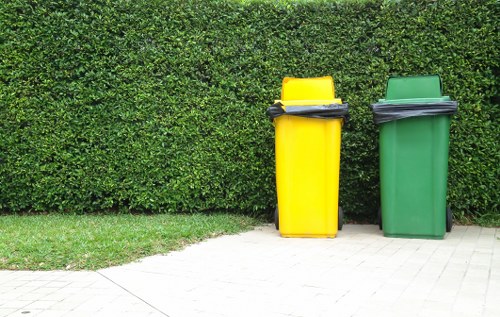
 Equipment such as compactors, bin tippers and lifting aids are maintained under a planned maintenance regime and only operated by trained staff. Lock-out/tag-out procedures apply during maintenance and cleaning. Storage areas for waste containers are kept tidy with clear access routes to prevent slips, trips and falls; signage is used to highlight hazards and temporary works.
 Emergency preparedness includes accessible first-aid provisions, spill kits, fire safety arrangements and communication protocols for serious incidents. A clear escalation path is established for events requiring external emergency services while protecting evidence for any internal investigations related to commercial waste operations.
Additional measures to support health and safety include the following operational commitments:
- Training and competence: regular refresher training on hazardous materials, manual handling and vehicle safety;
- Monitoring and audit: safety audits, spot checks and performance metrics to drive continual improvement;
- Health surveillance: where risk assessment identifies a need, appropriate health monitoring is provided.
We adopt a proactive approach to waste segregation and handling to reduce exposure to biological and chemical risks. Clear labelling, segregated containers and secure storage reduce the chance of cross-contamination. Staff are trained to identify suspected hazardous items and follow isolation and reporting procedures to ensure safety throughout the transport and transfer chain.
Consultation and communication are essential: safety committees, employee briefings and anonymous reporting channels are available to promote worker input. Regular reviews of this policy and operational procedures ensure they remain appropriate to the evolving nature of commercial waste services and rubbish removal practices. Manageable, well-communicated rules lead to safer operations and better service delivery.
Performance indicators such as incident rates, near-miss reports, audit findings and training completion rates are reviewed by management. Corrective actions are prioritised, tracked and verified to completion to ensure the system remains effective and to demonstrate continuous improvement in safety outcomes for the commercial waste service area.
All personnel engaged in commercial waste collection and removal are expected to read, understand and apply this policy. By working collaboratively, observing safe practices and reporting hazards promptly, the organisation seeks to deliver efficient rubbish company services while maintaining the highest practical standards of health and safety for everyone involved.
