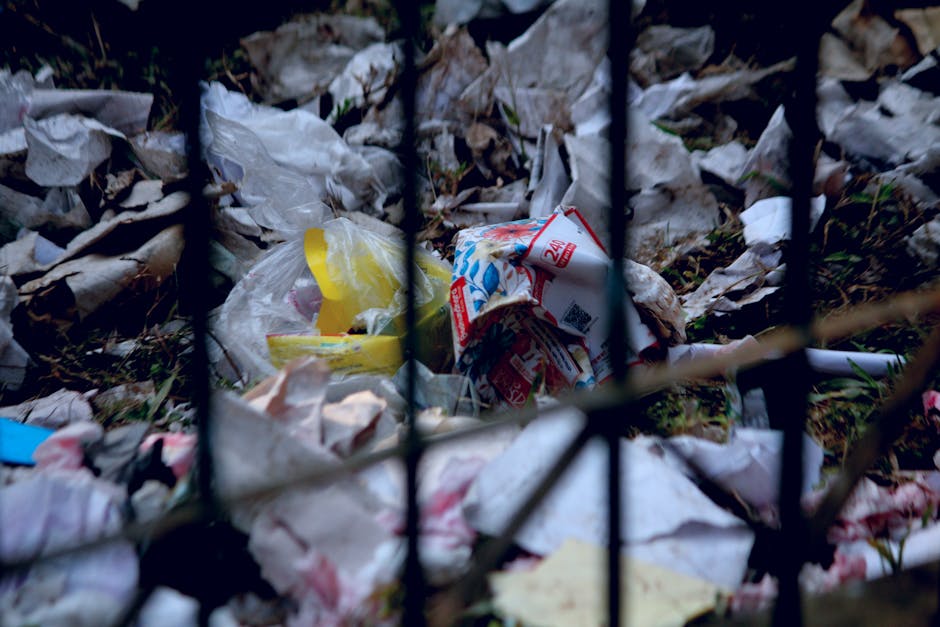
Commercial Waste in Crystal Palace
Commercial waste in Crystal Palace needs a practical service that keeps business premises clear, compliant and easy to run. We handle the collection and removal of non-household waste from shops, cafés, offices, studios and other premises, with work shaped around the type and quantity of waste involved. The focus is straightforward: remove what is no longer needed, route it for appropriate treatment where possible, and leave the site ready for normal use again.
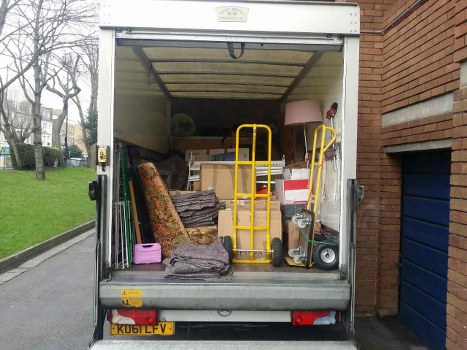
Our service is designed for routine business waste as well as one-off clearances linked to moves, refurbishments, stock changes or equipment replacements. Different waste streams need different handling, so the approach can vary from mixed general waste to segregated materials that benefit from separate collection. Clear disposal planning matters because it helps a business avoid unnecessary disruption and keeps the process tidy from the outset.
If you need a quotation, start by outlining the type of waste, the access to the premises and the amount that needs removing. You can also tell us whether the work is recurring or a single visit. That is usually enough to begin. For a simple first step, send the details through and ask for a quote.
Business waste removal for day-to-day operations

Day-to-day business waste removal often covers bags, cartons, packaging, obsolete stock, broken fittings and other items that build up as a workplace runs. The right service keeps these materials moving without forcing staff to manage a full skip or overfill an internal store area. For many premises, the most useful arrangement is a collection that fits the premises rather than a one-size-fits-all schedule.
We can support businesses that need occasional clearances and those that prefer an ongoing arrangement for regular waste streams. Business waste removal suits organisations that want a focused solution for non-domestic rubbish, while waste removal is a broader option where mixed items need collecting from the same site. Each approach is best chosen according to the quantity, composition and timing of the waste.
Office and workplace clearances

Office and workplace waste is often more varied than simple bagged rubbish. Desks may need dismantling, paper archives may need secure handling, and old monitors, chairs or storage units may have to be separated before collection. A well-planned office clearance reduces the chance of valuable space being tied up by items that no longer serve a purpose. It also helps when the work must happen around opening hours or between occupancies.
For premises with specialist office waste, office clearance is the most relevant page, while confidential shredding is useful where papers or records should be destroyed rather than mixed into general waste. If the job also includes desks, chairs or storage furniture, furniture clearance can sit alongside the main collection so that the removal plan matches the actual contents of the space.
When preparing for this kind of work, it helps to separate anything that must be kept from anything that is ready to go. A short list of room names, floor levels or access points is usually more helpful than a long explanation. You do not need to sort everything perfectly in advance; the aim is simply to make collection efficient and avoid unnecessary handling on the day.
Clearance for shops, studios and shared premises
Retail units, salons, studios and shared workspaces often generate a blend of cardboard, displays, shelving, packaging and out-of-date stock. The service needs to be flexible enough to deal with mixed contents while still keeping disposal organised. For some sites, that means collecting from a back room or storeroom; for others, it means removing larger items from the front of the property after trading has ended.
Where the main issue is a cluttered room, archive space or stock area rather than loose waste alone, flat clearance and home clearance can be relevant references for the sort of practical loading and sorting involved, although the commercial setting remains the priority here. If the clearance includes fitted furniture, shelves or counters, the work can overlap with furniture disposal so that items are dealt with appropriately instead of being treated as general rubbish.
A useful commercial clearance should feel orderly from start to finish. The key decisions are normally which areas to empty first, whether anything must be kept back for reuse, and how access will be managed if the premises are occupied. Those details help shape the visit so that removal is efficient without becoming disruptive to trading or staff movement.
Specialist items and awkward waste
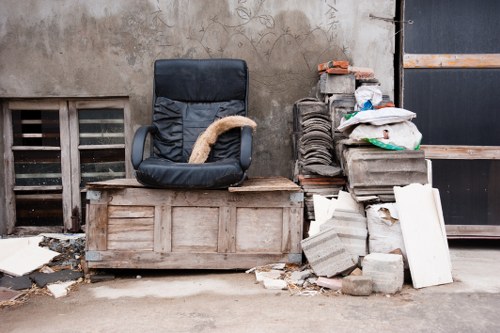
Some commercial waste cannot be treated as everyday rubbish because it has a specific disposal route or needs careful handling. This may include broken appliances, refrigeration units, mattresses from hospitality settings, or materials that are classed as hazardous. The point of using a specialist service is not simply to take the item away, but to make sure the work is matched to the material and the disposal route is suitable.
Relevant service pages include fridge and appliance removal, mattress and sofa disposal and hazardous waste disposal. Each of these needs a more careful approach than standard office or bagged waste, and each can sit within a wider commercial clearance if the premises contain mixed contents. The practical task is to separate what can be collected together from what needs distinct handling.
For businesses, it is often more efficient to identify specialist items at the quotation stage rather than leaving them to the end. That way the collection can be planned around loading order, handling requirements and any items that may need extra space or separation. If in doubt, list the unusual pieces first and the general rubbish second.
Furniture, fixtures and bulky items
Commercial premises regularly accumulate bulky items that are too awkward for ordinary waste bins. Tables, cabinets, desks, shelving, reception furniture and similar items need lifting, loading and transport as a separate task. Bulky removal is often as much about moving the item safely through the building as it is about disposal itself, particularly where corridors, lifts or shared access points are involved.
Our pages for furniture clearance and furniture disposal are useful when the main requirement is to remove larger items rather than mixed loose waste. For mattress or sofa items that arise in serviced accommodation or hospitality settings, mattress and sofa disposal gives a more exact route. Where the contents are mainly office furnishings, these services can sit alongside an office clearance without duplicating the work.
Good planning for bulky items usually comes down to access, quantity and whether anything must be dismantled before it can be carried out. A simple note about stairs, loading bays, lift sizes or restricted entry can make a big difference to the overall process. Keep the focus on the pieces that matter most, and the removal can be arranged around them.
Business clearances for storage areas and back-of-house spaces
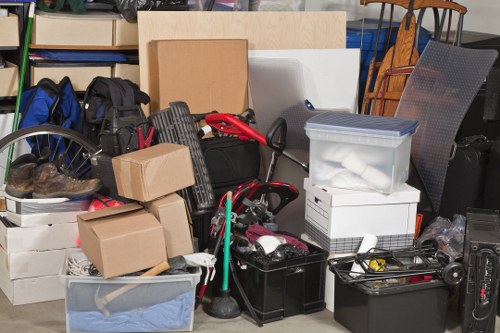
Storage areas, garages, lofts and back rooms can hide a large volume of commercial waste that is easy to ignore until the space becomes difficult to use. These areas often contain a mix of old stock, packaging, broken equipment and accumulated items from previous phases of the business. When they are cleared properly, they can return to being useful storage rather than becoming a long-term holding area for waste.
For this kind of work, garage clearance, loft clearance and builders waste clearance are helpful service pages where the contents are more mixed or more awkward than standard bin waste. If the job comes after alterations or fit-out work, builders waste may include timber offcuts, packaging, broken fixtures and other residual debris that needs sorted removal rather than a single casual load.
These clearances tend to work best when the items are grouped by type before collection begins. That does not mean everything must be pre-sorted into perfect categories. It simply means that obvious keep, donate, recycle and dispose piles are separated where possible, which reduces confusion and saves time when loading starts.
Pricing factors and quotation details
Commercial waste pricing usually depends on the volume of material, the type of waste, the ease of access and whether special handling is needed. A small office clearance with straightforward access is not the same as removing heavy furniture from a upper floor or collecting items that need segregation. The more clearly the waste is described, the easier it is to match the quotation to the real work involved.
The most useful quotation details are the location within the premises, the approximate amount of waste, any awkward pieces, and whether the work needs to happen at a specific time. For many jobs, photographs are helpful because they show stack height, item type and access conditions at a glance. If you prefer a simple route, pricing and quotes sets out where to begin, while book online may suit customers who already know what needs removing and want to move ahead.
Ask for a quote when you are ready, or send the basics through if you want help deciding which service fits best. A short description is enough to start the conversation, and it is usually easier to refine the plan once the main items have been identified. If your waste includes anything unusual, mention that first.
Recycling, reuse and responsible disposal
Commercial waste work is often strongest when it separates items that can be recycled or reused from those that need disposal. Cardboard, metal, selected furniture and some appliances may be handled differently from mixed residual rubbish. That distinction matters because it keeps the process organised and avoids treating every item as if it were the same material.
For customers who want to understand how recovered materials are approached, recycling and sustainability explains the principles used across the service. In practical terms, that means looking at the composition of the waste before loading begins, and then directing items towards the most suitable route available. The aim is to keep the job efficient without losing sight of responsible handling.
Not every load contains recyclable material, and not every item can be broken down for recovery. Some waste is simply mixed, damaged or contaminated. Even then, an orderly collection still helps because it reduces the chance of disposal becoming messy, delayed or difficult to track. That is especially important where a business is clearing several areas at once.
Other service pages that may be relevant
Some businesses need more than one type of collection, especially when a clearance includes mixed furnishings, storage waste and leftover packaging. In those cases, it can be sensible to look at several service pages together rather than forcing everything into a single broad category. The most relevant destination depends on what is actually present, not on how the waste was first described.
House clearance and furniture disposal may be useful references where a commercial property includes domestic-style contents or large mixed items. garden clearance can be relevant for outdoor maintenance waste from business premises, while what can go in a skip is helpful for understanding which materials need a different disposal route. Choose the page that most closely matches the actual job rather than the one that sounds broadest.
When the waste is clearly commercial, the main aim is still to create a collection plan that fits the site, the items and the disposal route. If you are unsure which page best matches your needs, send a short description and ask for a quotation. We can then point the enquiry toward the most suitable type of removal.
About Crystal Palace
Crystal Palace is an area in south London known for its elevated ridge, which gives long views across the city and has shaped the character of the district for generations. The name comes from the great glass exhibition building moved there in the 1850s after the Great Exhibition of 1851, and the area retains a strong association with that ambitious Victorian project. Although the original palace was destroyed by fire in 1936, the surrounding park still preserves traces of its history, including terraces, sculpture, and the site’s famous outline. The district spans parts of several London boroughs, which gives it a layered identity rather than the neat boundary of a single town centre. Its streets combine residential terraces, independent shops and busy local routes, while the parkland of Crystal Palace Park provides open space, sports facilities and visitor attractions. The park has a distinctive role in the area’s public life, with the dinosaur sculptures among its best-known features and the Italian terraces reflecting the scale of the original development. Transport connections have long mattered here too, with rail and road links making the area a junction between inner and outer south London. The result is a place that feels both urban and open, with architecture, landscape and local history sitting closely together.